Jaisalmer Itinerary · Travel Guide · Rajasthan
The Perfect Two-Day Jaisalmer Itinerary (With Routes for Every Traveler)
4 July 2026
Two days is enough to see Jaisalmer properly if you plan the order correctly. Get it wrong and you'll spend an afternoon in a rickshaw chasing sunset light you already missed, or standing at Patwon ki Haveli's stairs wondering if your knees will make it to the top.
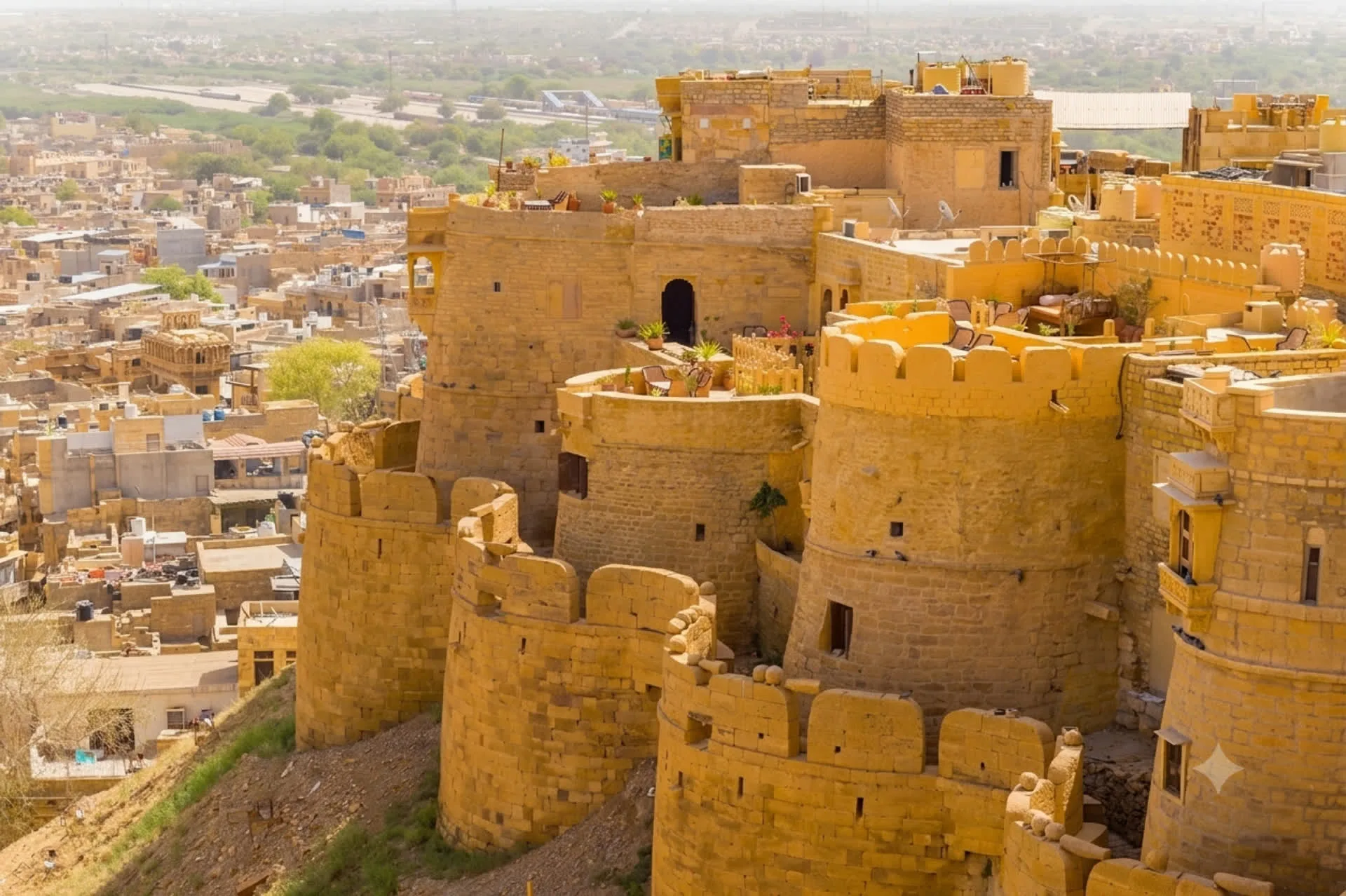
This itinerary is built around one fact: Jaisalmer Fort and Sam Sand Dunes both look best in specific light, and everything else fits around those two windows. Below it, you'll find three variations, one for travelers who want a slower pace and fewer stairs, one for families, and one for backpackers who'd rather walk than pay for a cab.
Key Takeaways
- Jaisalmer Fort is open 9 AM to 5 PM, but the golden light that gives it its name shows best at sunrise or in the final hour before closing (Jaisalmer Fort Guide, 2026).
- Sam Sand Dunes sit about 45 km from the city; most visitors leave by 3 to 4 PM to catch a camel or jeep ride before the 5:30 to 6:30 PM sunset (Agate Travel, 2026).
- November through February is the reliable window, with daytime temperatures around 12 to 28 degrees Celsius. Avoid April through August, when it climbs past 42 degrees (MakeMyTrip, 2026).
- Patwon ki Haveli has narrow, steep stairs that aren't kind to bad knees or wheelchairs, so build in extra time or skip the upper floors if that's a concern (Thrillophilia, 2026).
When Should You Actually Go?
Go between November and February. Daytime temperatures sit in the 12 to 28 degrees Celsius range, nights are cool enough for a shawl, and you can walk the fort's ramparts at noon without wilting (MakeMyTrip Trip Ideas, 2026).
Skip April through August. Temperatures regularly cross 42 degrees Celsius and can hit 45 at the peak of summer (Climates to Travel, 2026). Even a short walk between havelis becomes a real endurance test, and the desert safari loses most of its appeal when the dunes are radiating heat back at you at 6 PM instead of holding the sunset's color.
September and October sit in between. Rain is rare (Jaisalmer gets about 200mm a year total), but daytime temperatures still run 23 to 36 degrees Celsius, so it's workable if winter dates don't line up with your schedule (Climates to Travel, 2026).
Day 1: The Fort City
Morning: Jaisalmer Fort (9 AM to 12 PM)
Arrive at opening, 9 AM, before the tour buses. Jaisalmer Fort is a living fort, meaning families still live and run shops inside its walls, which is rare among India's forts and part of what makes it worth the early start (Jaisalmer Fort Guide, 2026).
Entry runs 50 rupees for Indian visitors and 250 rupees for foreign nationals, plus 50 rupees for a still camera and 100 for video (Rajasthan Tour Driver, 2026). Budget 2 to 3 hours to walk the ramparts, see the Jain temples inside the fort walls, and wander the lanes without rushing.
Midday: Patwon ki Haveli and Salim Singh ki Haveli (12 to 2 PM)
Patwon ki Haveli is a cluster of five havelis built by the same merchant family, and its carved sandstone facades are the most photographed in the city. It's open 9 AM to 5 PM, with entry around 20 to 30 rupees for Indians and 100 to 150 rupees for foreign visitors (Transindia Travels, 2026).
One real caution here: the stairs inside are steep and narrow, and multiple sources flag them as difficult for older visitors, anyone with knee problems, or wheelchair users (Thrillophilia, 2026). If that's a concern for anyone in your group, see the senior-friendly route below.
Five minutes away stands Salim Singh ki Haveli, built in 1815 by Jaisalmer's prime minister and topped by a roof carved in the shape of a dancing peacock. Entry is 20 rupees for Indians and 100 for foreign visitors, it opens 8 AM to 6 PM, and his descendants still occupy part of the building (Jaisalmer Tourism, 2026). The two havelis sit close together, so seeing both adds half an hour, not half a day.
Afternoon: Rest, Then Head for the Dunes (2 to 3:30 PM)
Go back to your hotel, eat, and get out of the midday sun. This is also when a pool earns its keep. Most desert safari operators want you leaving the city by 3 to 4 PM to reach Sam Sand Dunes, about 45 km west, with enough daylight left for a camel or jeep ride before sunset (Agate Travel, 2026).
Evening: Sam Sand Dunes at Sunset (4 to 9 PM)
Sunset over the Thar falls around 5:30 to 6:30 PM depending on the season, and it's the single best photo opportunity in the itinerary (Sam Sand Dunes, 2026). You can do a one-hour camel ride to the dunes or a longer six-hour version if you want the overnight camp experience; jeep safaris run one to two hours for those who'd rather skip the camel (Agate Travel, 2026).
Most day-trippers return to the city by 9 to 10 PM after dinner and a folk performance at the dunes (Jaipur Private Tours, 2026).
Day 2: Water, Views, and a Slower Pace
Morning: Gadisar Lake and Vyas Chhatri (9 to 11 AM)
Gadisar Lake was Jaisalmer's only water source for centuries, dug by hand and ringed by temples and stone ghats. It photographs best in morning light, before the heat flattens everything. From there, Vyas Chhatri is a short trip away: a cluster of carved cenotaphs with one of the better sunset viewpoints in the city, though morning works fine too if you're prioritizing the fort or dunes for golden hour instead.
The lake charges no entry fee, and pedal boats rent for 100 to 300 rupees depending on size, which makes this the easiest stop to do with children (Trawell.in, 2026). If your evening is free instead, the Krishna temple on the embankment holds an evening aarti as the light fades over the water, and the ghats are flat enough for any walking ability.
Midday: Kuldhara or Amar Sagar (11 AM to 2 PM)
If you have any interest in the region's stranger history, Kuldhara is worth the roughly 18 km drive from the city. The Paliwal Brahmin village was abandoned overnight in the early 1800s, and the empty houses still stand along its lanes. It's a slower, quieter stop than the fort, good for filling the midday hours when the light isn't doing you any favors anyway.
If you'd rather stay closer to the city, use this window for lunch and a break at your hotel instead. There's no rule that day two has to be as packed as day one.
Amar Sagar and Lodurva make a quieter alternative on the same side of the city: a lake-palace complex and the Jain temples of the Bhatti capital that preceded Jaisalmer itself, about 15 minutes apart by road.
Afternoon: Rooftop or Terrace Time (2 to 5 PM)
This is the block to protect. Two days of walking sandstone lanes in desert heat adds up, and the afternoon lull is where most people quietly give up on their itinerary. Use it for a nap, a swim, or a slow lunch instead of forcing in one more monument.
Evening: Candlelight Dinner or Folk Performance (6 PM onward)
Close the trip the way you'd want to remember it: a private terrace dinner overlooking the property, or an evening of Kalbeliya dance, Ghoomar, and live folk music around a fire. Both are lower-effort than another round of sightseeing and work well as a last evening in the city before an early flight or train out.
The Senior-Friendly Route
Swap Patwon ki Haveli's upper floors for the ground level only, or replace it with time at Gadisar Lake instead, since the lake's ghats are flat and walkable without stairs. Do the fort in the cooler morning hours and rest through midday rather than adding a second walking stop.
For the desert evening, choose the jeep safari over the camel ride. It's shorter, doesn't require mounting an animal, and still delivers the same sunset. Ask your hotel to arrange a private vehicle for the day rather than a shared group tour, so you can set your own pace instead of matching a group's schedule.
The Family Route
Kids tend to enjoy the fort's maze of lanes and the camel ride more than the haveli stairs, so if time is tight, prioritize those two. Bring water and snacks; there's limited shade between stops. The dunes in the evening are usually the highlight for children, especially if you add the overnight desert camp option with dinner and a folk show rather than a same-day return.
Ask about a family-sized room or connecting rooms before you book. Heritage Inn's Luxury Suite is built as two connected rooms with 1.5 bathrooms specifically so a family of five isn't negotiating over who sleeps where.
The Backpacker Route
Skip the private taxi for city sightseeing and walk between the fort and the haveli cluster; they're close enough that a cab isn't necessary if you don't mind the heat. For the dunes, a shared jeep safari costs less than a private one and is easy to arrange through most guesthouses or your hotel's travel desk.
Per-kilometer taxi rates in Jaisalmer run around 20 to 22 rupees, and a full-day local sightseeing car with driver typically starts near 1,600 to 2,800 rupees depending on the vehicle (MakeMyTrip Car Rental, 2026). Splitting a jeep safari with other travelers at your hotel is the easiest way to bring the dunes cost down without giving up the sunset.
If You Have a Third Day: Khichan's Cranes
From late August through March, the village of Khichan near Phalodi hosts one of India's stranger wildlife spectacles: more than 20,000 demoiselle cranes that migrate from Central Asia and gather each morning at a feeding ground the village has maintained for decades (Khichan, Wikipedia, 2026).
Khichan sits about 170 km from Jaisalmer, roughly a three-hour drive, which makes it a committed day trip rather than an add-on. Go at dawn, watch the morning feeding at the chugga ghar, and carry a zoom lens, since visitors watch from a respectful distance. December through February brings the largest flocks.
Practical Tips and Tricks
Carry small cash for entry fees. Camera charges and haveli entries are collected in cash at the gate, and change isn't always available for large notes.
Layer for the temperature swing. Even in winter's ideal window, nights and early mornings drop into single digits Celsius while afternoons climb into the high 20s. A light shawl handles both ends.
Don't skip sunscreen because it's winter. Desert sun is intense year-round, and the fort's ramparts offer no shade for most of the walk.
Book desert safari transfers through your hotel. Arranging camel or jeep timing directly with your hotel's travel desk means someone else is tracking sunset time and pickup logistics, which matters more than it sounds like when you're three days into a Rajasthan trip and running on less sleep than planned.
Confirm haveli and fort timings before you go. Hours shift around festivals and local holidays, and more than one source flags this as worth double-checking on the day (Jaisalmer Fort Guide, 2026).
Frequently Asked Questions
Is two days enough time in Jaisalmer?
Two days covers the fort, the haveli cluster, and one evening at Sam Sand Dunes comfortably. A third day gives you room for Kuldhara, Amar Sagar, or a slower pace, but it isn't required to see the city's main sights.
What should older travelers know before visiting Jaisalmer Fort and the havelis?
Jaisalmer Fort's ramparts are walkable without stairs, but Patwon ki Haveli's interior stairs are steep and narrow, and several travel guides specifically caution against them for visitors with knee or mobility concerns (Thrillophilia, 2026). Sticking to ground-floor haveli viewing and choosing a jeep over a camel at the dunes removes most of the physical strain.
How far are Sam Sand Dunes from Jaisalmer city?
About 45 km, roughly a 45-minute to one-hour drive depending on traffic and your starting point in the city (Sam Sand Dunes, 2026).
What's the best month to visit Jaisalmer?
December and January offer the most reliable combination of cool nights and comfortable daytime temperatures, though the full window from November to February works well (MakeMyTrip Trip Ideas, 2026).
The itinerary above assumes you're staying somewhere central enough that a 9 AM fort visit and a 3 PM dune departure are both realistic without an hour of driving in between. That's the biggest planning variable most guides skip: where you sleep decides how much of your two days you spend in a car instead of at the places you came to see.
Check Rooms & RatesSources
- JCR Desert Safari Camp, “Jaisalmer Fort Guide 2026”, https://jcrdesertsafaricamp.com/jaisalmer-fort/
- Rajasthan Tour Driver, “Jaisalmer Monuments Entry Fees and Timings 2026”, https://www.rajasthantourdriver.com/jaisalmer/jaisalmer-fort-havelis-entry-fees-timings/
- MakeMyTrip Trip Ideas, “Best Time to Visit in Jaisalmer”, https://www.makemytrip.com/tripideas/jaisalmer/best-time-to-visit
- Climates to Travel, “Jaisalmer climate: seasons, when to go, monthly averages”, https://www.climatestotravel.com/climate/india/jaisalmer
- Sam Sand Dunes, “Official site”, https://samsanddunes.com/
- Jaipur Private Tours, “Jaisalmer Sam Sand Dunes Day Trip”, https://januprivatetours.com/blog/jaisalmer-sam-sand-dunes-day-trip
- Agate Travel, “Sam Sand Dunes: Timings, Entry Fee & How to Reach”, https://www.agatetravel.com/sam-sand-dunes-jaisalmer-india.html
- Thrillophilia, “Patwon Ki Haveli, Jaisalmer: How To Reach, Best Time & Tips”, https://www.thrillophilia.com/attractions/patwon-ki-haveli
- Transindia Travels, “Patwon Ki Haveli, Jaisalmer - Entry Fee, Visit Timings”, https://www.transindiatravels.com/rajasthan/jaisalmer/patwon-ki-haveli/
- MakeMyTrip Car Rental, “Affordable Cabs in Jaisalmer”, https://www.makemytrip.com/car-rental/jaisalmer-city-cabs.html